
 Home
Home About Us
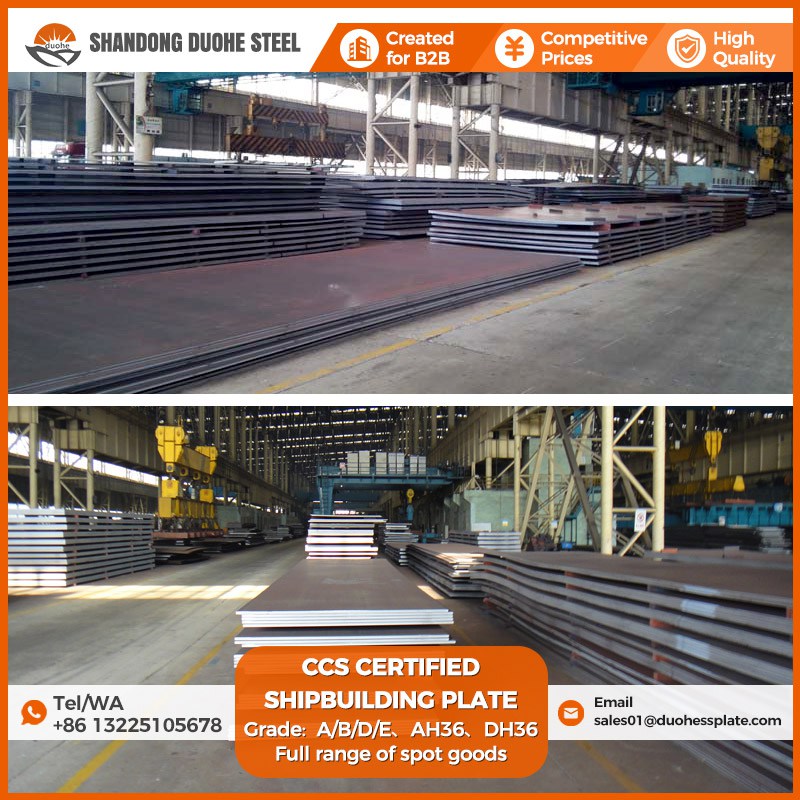
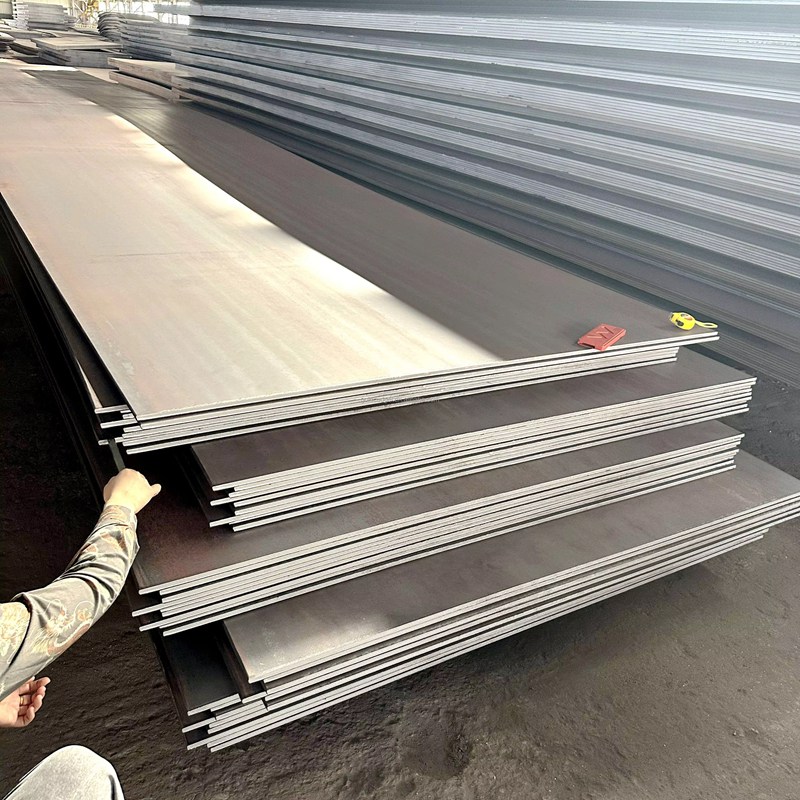
Carbon Steel Shipbuilding Plate
Product Overview
Carbon steel shipbuilding plates are specifically engineered flat-rolled steel products used in the construction of oceangoing vessels, inland waterway ships, and marine structures. They must withstand extreme dynamic loads, corrosive marine environments, and varying temperatures throughout the vessel's service life .
Quick specification summary (export focus)
| Item | Typical range / common options | Buyer notes |
| Common standards | ASTM A131 (US), EN 10025 / EN 10225 (Europe), DNV‑OS/EN, GB/T 3274 / GB/T 700 / GB/T 1591 (China) | Specify governing standard and classification society acceptance in RFQ |
| Typical grades | ABS A/B/D/E, DNV Grade A/B/C, ASTM A131 Grade A/B/D, EN S355G1+M, Chinese grades Q235, Q345 | Match grade to ship type and structural location; check exact properties on MTR |
| Thickness range | 3 mm – 200+ mm (commonly 4–40 mm for hull plates; thicker for structural parts) | Confirm mill capability and recommended flatness tolerances per thickness |
| Plate sizes | Widths commonly 1,500–3,500 mm; lengths up to mill limits (6–18 m or longer) | Large plates reduce welding but affect transport/logistics; confirm max vessel transport width |
| Surface finish | Mill scale, shot‑blasted, primed, or coated | For immediate painting/coating, request blast and primer; internal spaces may need cleaner finish |
| Mechanical properties | Yield (e.g., A/B grades: ~235–355 MPa depending on grade), Tensile per standard, Elongation % | Use values on MTR for structural calculations; ensure min. properties meet class rules |
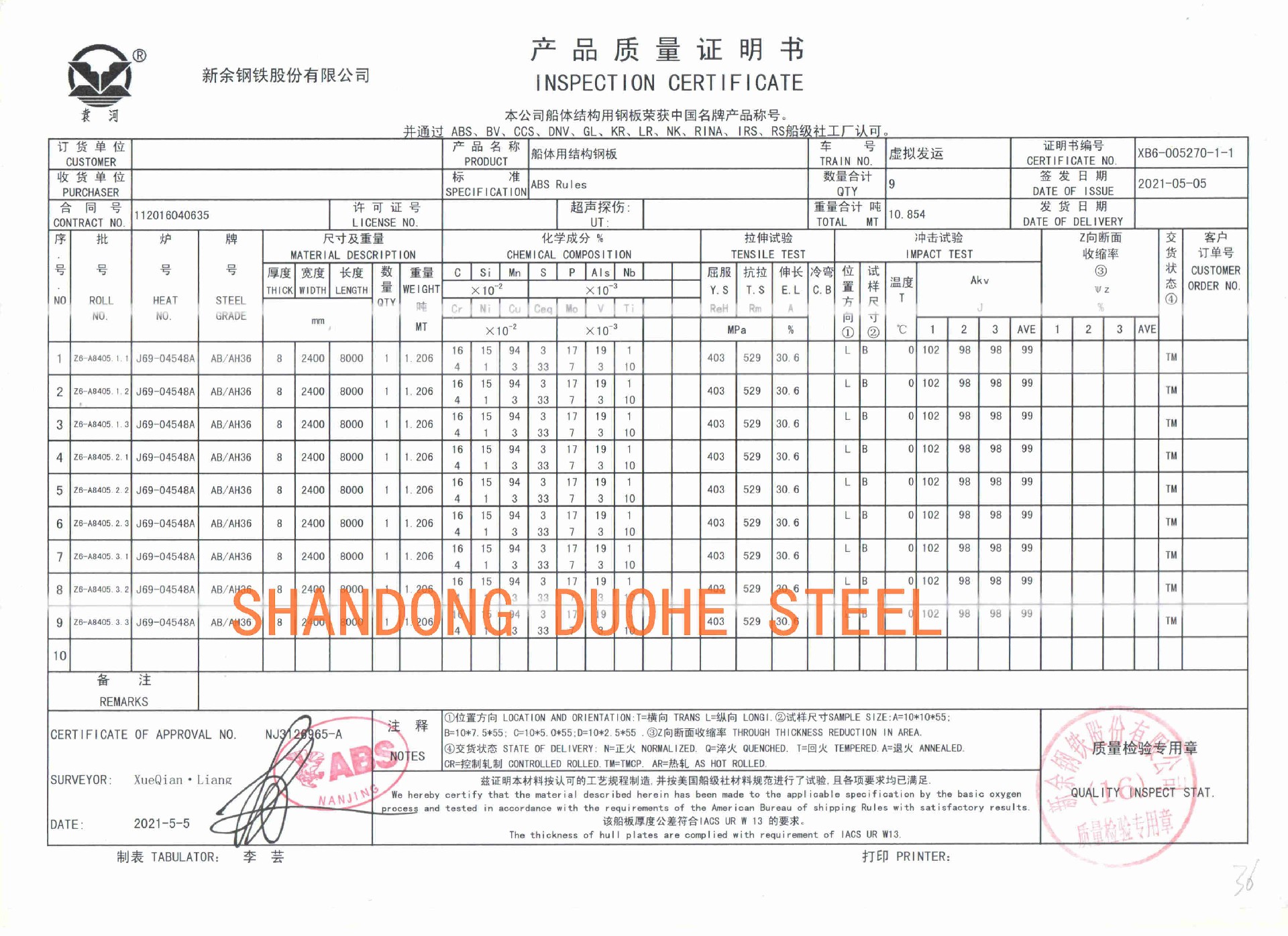
| Toughness / impact | Charpy V‑notch typical at 0°C, −10°C, −20°C or lower per class and service region | Specify impact temperature in RFQ and require Charpy reports on MTR |
| Weldability | Good for common shipbuilding carbon steels; high‑strength steels require WPS and qualified procedures | For higher grades (S355/S420 etc.) control preheat and HAZ toughness — require WPS |
| Edge condition | Sheared, flame cut, edge‑rounded or profiled | Specify edge prep if butt welding prefabricated panels; prefabrication often needs square edges |
| Tests & docs | MTR (EN 10204 3.1/3.2), Charpy, tensile, chemical analysis, UT/radiography if required by class | For class approval include mill/third‑party certificates and plate marking |
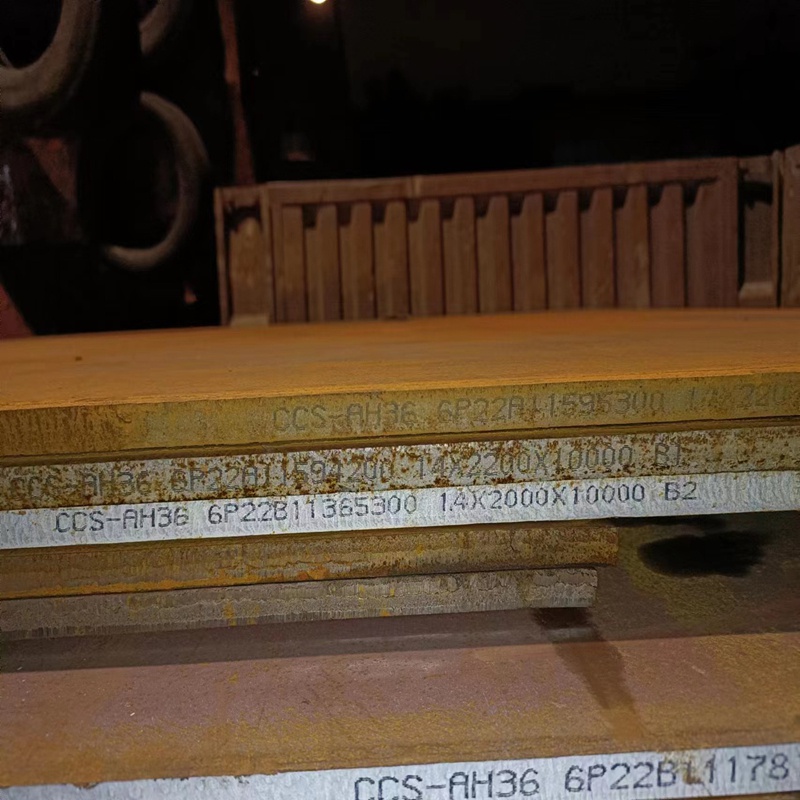
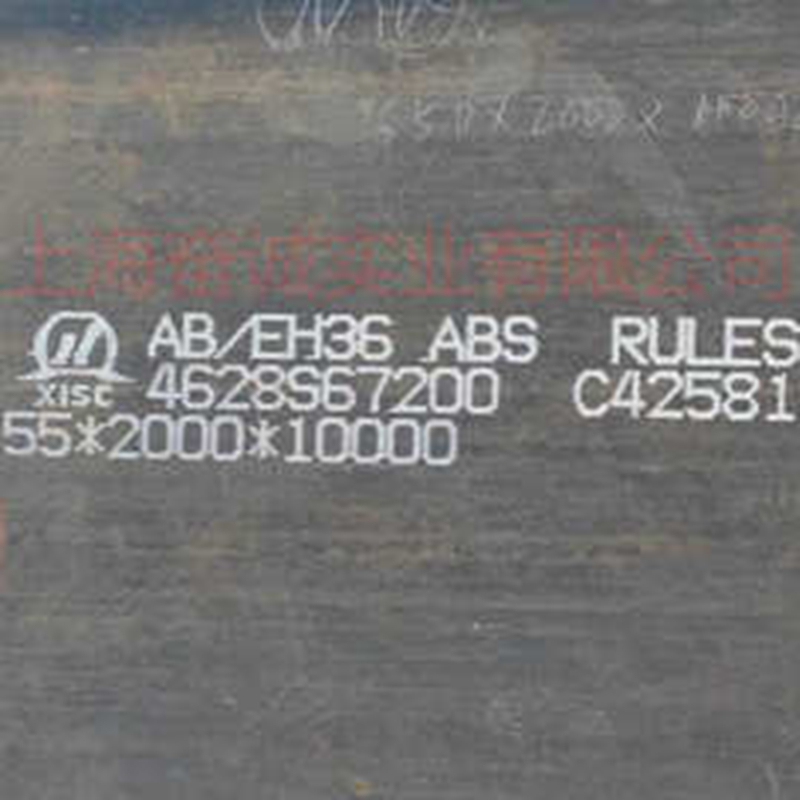
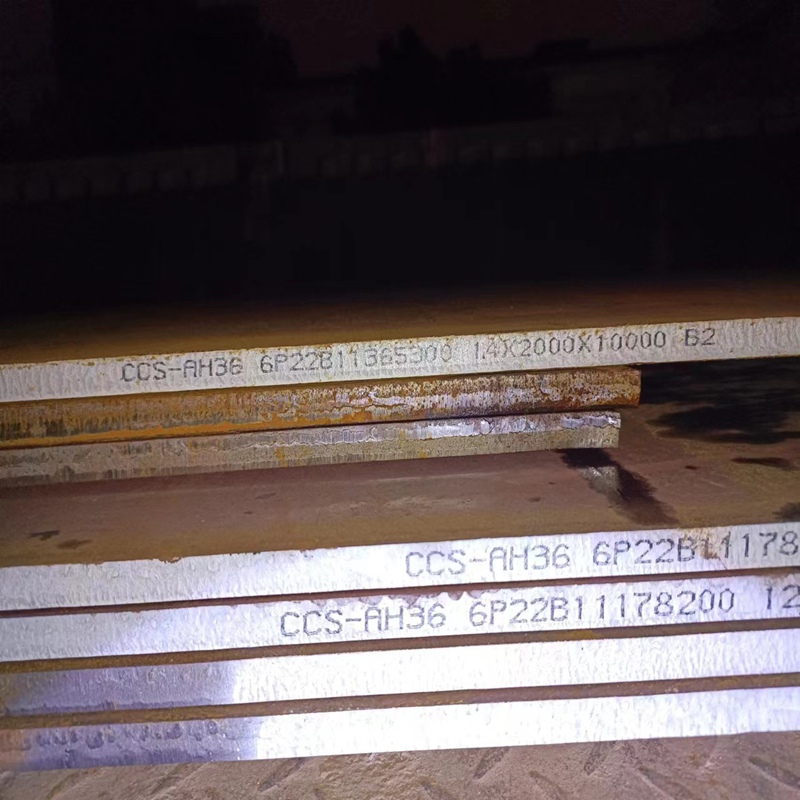
| Packing & marking | Bundles with timber dunnage, VCI/wax, steel banding; mark each plate with grade, thickness, heat no. | Include class/production certificates in shipping docs; ensure barcodes/labels for yard tracking |
Mill Test Certificate (MTC) Provided for Each Batch
Shipbuilding Steel Grade Comparison Table
| Grade Category | Class Society Grade | Yield Strength (MPa) min | Tensile Strength (MPa) | Typical Application | Key Characteristics |
| Ordinary Strength | A, B, D, E | 235 | 400-520 | Hull structures, secondary framing in mild environments | Good formability and weldability for general use |
| Higher Strength (32 ksi) | AH32, DH32, EH32, FH32 | 315 | 440-590 | Primary hull structure, decks, and bulkheads | Higher strength-to-weight ratio for reduced plate thickness |
| Higher Strength (36 ksi) | AH36, DH36, EH36, FH36 | 355 | 490-620 | High-stress areas, support structures for large loads | Industry workhorse for modern commercial vessel construction |
| Higher Strength (40 ksi) | AH40, DH40, EH40, FH40 | 390 | 510-660 | Critical structural elements in large container ships and naval vessels | Enhanced strength for ultra-large vessels |
| Specialized High-Strength | API 2Y, A514 equivalents | 690+ | 760-895 | Specialized military, offshore platforms, icebreakers | Quenched and tempered for extreme conditions |
FAQ — Frequently Asked Questions (for international buyers)
Q: Do ship plates need Charpy impact testing?
A: Often yes. Classification societies require Charpy impact tests at specified temperatures depending on vessel type, service region and plate location. Specify impact temperature in the RFQ and require Charpy results on the MTR.
Q: How important is plate flatness and straightness?
A: Very important. Poor flatness increases prefabrication time, welding and distortion, and can affect hull fairness. Specify acceptable flatness/straightness tolerances in the PO and request supplier flatness certificates for critical plates.
Q: What welding controls are needed for higher strength ship plates?
A: Higher strength steels need controlled preheat/interpass temperatures, qualified WPS/PQRs and experienced welders. For thicker sections monitor HAZ toughness and perform repair/prequalification welds if needed.
Q: How are plates packed for export to prevent corrosion and damage?
A: Plates are bundled with timber dunnage, VCI/wax paper between plates, steel banding, edge protectors and waterproof wrapping. For long sea transit request temporary corrosion inhibitor or blast/primer as required.
Contact our sales team today for a quotation or to discuss your project requirements. We are committed to providing high-quality shipbuilding plates that meet your exact specifications and delivery deadlines.
Your trusted partner in shipbuilding plates solutions.For further technical information, pricing, or customization, please contact our sales team:
Tel/WA/Wechat: +86 13225105678
Email: sales01@duohessplate.com
Previous:no more
Next:no more
Leave a Message
Your voice matters! Whether you have a brilliant idea, valuable feedback, a pressing question about our products or services, or simply want to say hello – we genuinely want to hear from you.